Service

AI adoption: from access to impact

The licenses are there, the training is done. What’s missing is the usage. That is not a technology problem – and not a training problem either.

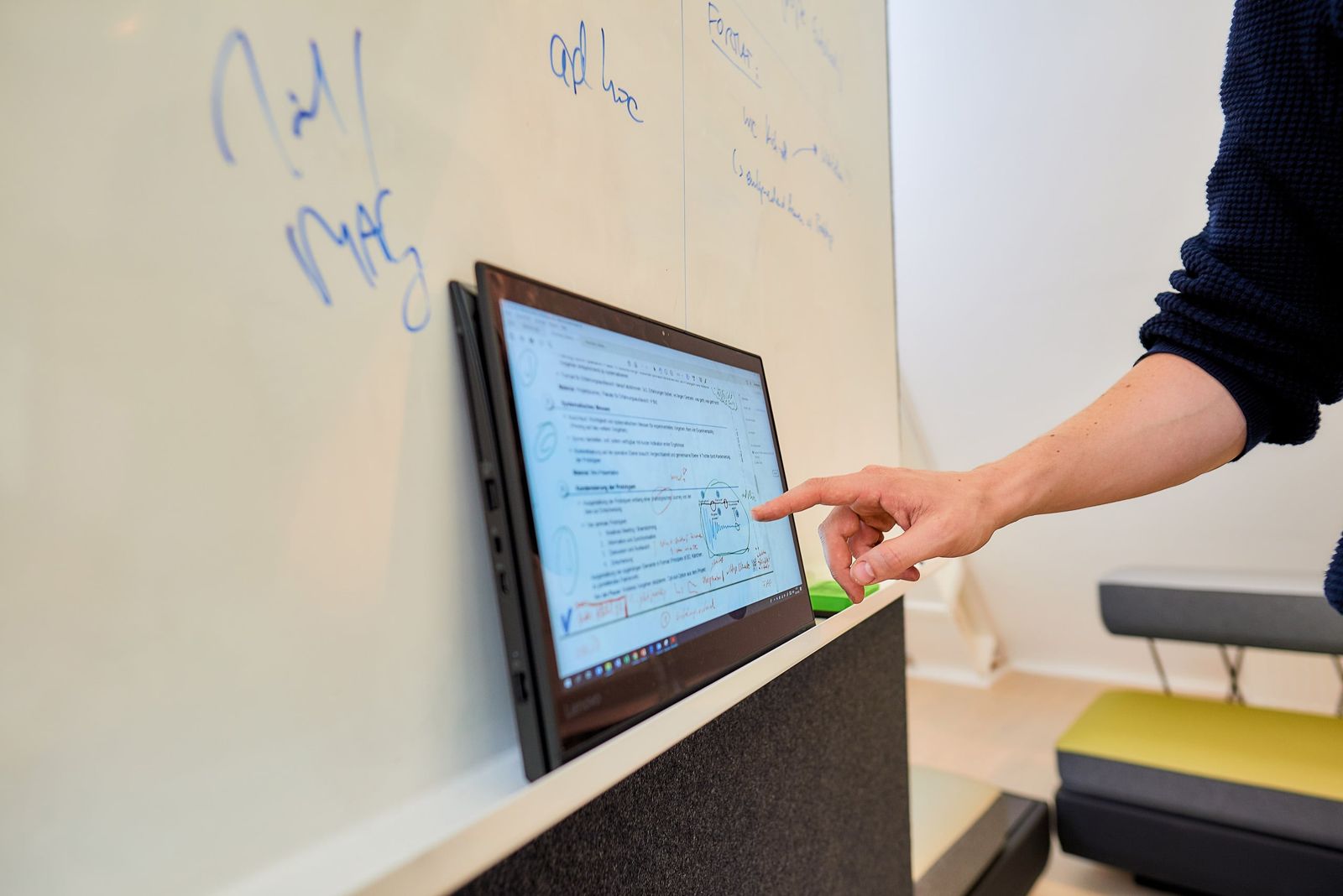
A hand pointing at an annotated concept on a screen

In brief

What is AI adoption?

AI adoption means that employees actually use AI in their everyday work – regularly, independently and for their real tasks. It begins where the rollout ends: licenses and training create access, but beliefs, norms and routines decide whether people use it. That is why we measure four behavioral barriers – perspective, uncertainty, resistance and error culture, or P.U.R.E. for short – and start where an organization is actually stuck.

Why the usual approach falls short

Tool training changes how people operate the software. Whether someone uses AI day to day depends on beliefs: Am I allowed to? Does it count as real work? What do the others think? As long as these questions go unanswered, the tool stays closed.

Only one in three employees without a leadership role finds their own leadership’s communication on AI clear.

BCG, AI at Work · June 2026 · around 12,000 respondents

Four barriers: P.U.R.E.

We measure four barriers that decide whether AI is adopted.

P

Perspective

Management rates the state of AI use higher than the teams do.

U

Uncertainty

Unspoken norms: using AI “feels like cheating”.

R

Resistance

Good prompts are guarded rather than shared. Knowledge stays in silos.

E

Error culture

Where failing isn’t allowed, learning doesn’t happen either.

P.U.R.E. was developed from behavioral research and from our project work. More on the method

Formats

From first findings to a system

AI Quickcheck2 minutes · in GermanA first assessment of where you stand along the four barriers.
Behavioral Review of your rollout concept1 consulting dayFixed price EUR 3,000Your rollout or training concept, read against the behavioral evidence: a list of findings, before-and-after suggestions, one conversation.
Hands-on workshop for leadership teams3 hoursFixed price EUR 2,500Leaders work on their own cases with their own accounts – including guardrails on data protection and the EU AI Act.
P.U.R.E. Diagnosis2–3 weeksFixed price EUR 9,500Your organization’s barrier profile from interviews and a survey, with prioritized interventions.
Adoption Sprint4–6 weeksOne pilot department, fixed occasions in the workflow, shared routines, before-and-after measurement.
Support program12 weeksKnowledge base, skill library, measurement framework – the system behind the usage.

Fixed prices are net, plus VAT.

Case · Digital transformation · Sales

AI moves sales forward

A leading company in digital transformation

Starting point. The sales organization wants to become faster and better with AI. The accounts are there – “nobody dares to touch it”.

Kick-off: a workshop with the sales leaders. The goal: to show a sales organization the opportunities of artificial intelligence – very practical and concrete, with applications from their own business and with implications for their own day-to-day leadership.

After that: systematic rather than piecemeal.

  1. Analyze processes – where in the sales process does the effort arise, and where the value?
  2. Define critical paths – the few workflows in which AI makes the biggest difference. That is where the work starts.
  3. Set governance – which data may go in, who signs off. Guardrails as empowerment, not as prohibition.
  4. Map resistance – which beliefs are holding people back? Made visible in the workshop, not assumed.
  5. Assign ownership for skills – every reusable AI workflow has a responsible person who maintains it and passes it on.

Result. The sales leaders have been working actively with AI ever since – and the five steps show the way from a single use case to a system.

10 out of 10
willing to put what they learned into practice
9.8
out of 10 – workshop rating

“I was completely surprised by what is possible – and how quickly I can become productive here.”

“I am now firmly resolved to use this approach every day.”

“It was fun, and we learned incredibly fast.”

Short answers

Frequently asked questions

What most often makes AI adoption fail?

Rarely the technology. More often questions nobody has answered: Am I allowed to? Does it count as real work? What happens if I make a mistake? We sort these barriers into four groups: perspective, uncertainty, resistance and error culture.

Isn’t training enough?

Training changes how people operate a tool, not their habits. Usage develops when there are fixed occasions in the workflow, when good applications are shared and when leaders visibly work with AI themselves.

How can AI adoption be measured?

Not by the number of licenses handed out. What matters is how regularly AI is used, for which tasks, and whether knowledge is shared. The P.U.R.E. Diagnosis provides a barrier profile from interviews and a survey.

What is shadow AI?

Shadow AI means that employees use AI tools for their work that the company has not approved – usually through a private account. It is a risk, because nobody knows which data leaves the company. And it is a signal: the need is there, and the official offering doesn’t meet it. A ban alone just pushes the usage out of sight.

Where do you start?

With the smallest format that makes a decision possible. The Behavioral Review reads your rollout or training concept against the behavioral evidence in one consulting day. In the hands-on workshop, leaders spend three hours working on their own cases with their own accounts.

What does it cost to get started?

The Behavioral Review costs EUR 3,000, the hands-on workshop for leadership teams EUR 2,500, the P.U.R.E. Diagnosis EUR 9,500. All prices are fixed, net, plus VAT.

How do you deal with data protection and the EU AI Act?

The hands-on workshop covers the guardrails on data protection and the EU AI Act: which data may go in, who signs off. It does not replace legal advice.

Let’s talk about your dragons.

There is one guarding every treasure. Thirty minutes, no obligation.